Latest Posts
View the latest posts in an easy-to-read list format, with filtering options.
View the latest posts in an easy-to-read list format, with filtering options.
Multi-part posts on a particular topic, grouped together in "series" pages.
Look through our blog archive by year / month, or in a massive title list.
10/26/2026 - Ezekiel 4:7 says, 7 Then you shall set your face toward the siege of Jerusalem with your arm bared... Read More

10/26/2026 - Pastor Fiaz sent me this report today… Dear Dr. Stephen E. Jones, Greetings in the precious... Read More
10/23/2026 - Ezekiel 4:1–8 presents the coming siege of Jerusalem through a prophetic sign. Having appoin... Read More
Read over 100 books written by Dr. Jones, available to read for free online. Several of the books have also been translated into different languages, and are also available to read for free. The only time you pay is when you purchase a physical version of a book.
View Full Book List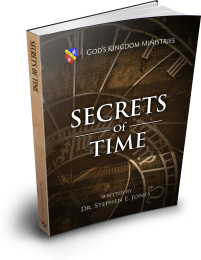

Read a variety of tracts that condense a topic into a short, single page format. These tracts can be read for free online, or physical copies can be purchased in bundles. If you are subscribed to the FFI Newsletter, you will receive new tracts when they are released.
View Full Tract List
This 128-page book outlines the four main features necessary to have a Kingdom, finishing with a lengthy section on adopting a Kingdom worldview.
Category - General

Ezekiel 44:15-17 speaks of the Melchizedek priests, code named “the sons of Zadok.” These priests of righteousness have access to the Holy Place to minister directly to God Himself, whereas the priests who had gone astray were consigned to the outer court to minister to the house. We read in Ezekiel 44:17, 18,
17 It shall be that when they enter at the gates of the inner court [i.e., the Holy Place], they shall be clothed with linen garments; and wool shall not be on them while they are ministering in the gates of the inner court and in the house. 18 Linen turbans shall be on their heads and linen undergarments shall be on their loins; they shall not gird themselves with anything which makes them sweat.
This is a prophetic application of the law in Exodus 28:39-43, where the sons of Aaron were to be dressed in linen when they “minister in the holy place” (Exodus 28:43). The law here distinguished between a priest and a Levite. Levites were consigned to the outer court to help with the sacrifices, while the priests (sons of Aaron) were allowed into the Holy Place of the sanctuary itself. (Of course, only the high priest was allowed into the Most Holy Place.)
The Levites in the outer court were not allowed to dress in linen. No doubt most of them were dressed in woolen clothing, as this was the main fabric of the day. But the priests had to be dressed in linen when they ministered to God.
Ezekiel’s prophecy explains the law on a new level, foreshadowing a new distinction that was to be made under the New Covenant. Whereas the law distinguishes between Levites and priests descended from Aaron, the prophet draws a distinction between idolatrous priests and the sons of Zadok. His prophecy explains the meaning of the rejection of the dynasty of Eli and the calling of a new dynasty from Zadok, which had taken place in the early days of Solomon’s reign.
This foreshadowed a greater change of priesthood that was yet to come, showing the rejection of the tribe of Levi itself and the calling of the Melchizedek Order that had no genealogical requirement.
Ezekiel says that some priests who qualified for priesthood by their genealogy were disqualified by their character and for going astray after the manner of Eli and his sons. The prophet’s application of the law is extraordinary and unique in prophecy. Men were not given the authority to institute such a change of priesthood, nor did men have the power to disqualify the children of Aaron from ministering as priests. God alone has the authority to make such a change.
Ezekiel prophesied that “the sons of Zadok” alone were to minister to God in the sanctuary. The book of Hebrews later clarified this to mean that a change of priesthood from Levi to Melchizedek had been decreed by God Himself. This was proven by the fact that the new High Priest was from the tribe of Judah, “a tribe with reference to which Moses spoke nothing concerning priests” (Heb. 7:14). Hence, the Melchizedek Order was no longer entrusted to the genealogical descendants of Aaron and Levi which had rejected Jesus Christ.
Both the law and the prophet Ezekiel speak in terms of fabric called linen, but we know from Rev. 19:8 that such fabric was a mere type and shadow of the character and acts of the believers, which God truly required of His priests. So “the sons of Zadok” were required to dress in linen during the centuries leading to the coming of Christ, but the Melchizedek Order is now required to dress in “the righteous acts of the saints.”
The prophet interprets this in Ezekiel 44:17, saying that these priests are not to minister to God while dressed in “wool.” Ezekiel 44:18, says that these priests “shall not gird themselves with anything which makes them sweat.” This requirement traces back to God’s curse upon Adam in Gen. 3:17-19,
17 … Cursed is the ground because of you; in toil you will eat of it all the days of your life. 18 Both thorns and thistles it shall grow for you; and you will eat the plants of the field; 19 By the sweat of your face you will eat bread, till you return to the ground, because from it you were taken; for you are dust, and to dust you shall return.
Sweat is a token of the curse for Adam’s sin. The priests of God, then, are ultimately required to overcome Adam’s sin in order to minister to God in His sanctuary. We know that this is done by becoming sons of God through faith in Christ. Whereas corrupt and unbelieving descendants of Aaron might minister in an earthly sanctuary—as did Eli’s corrupt sons—no one will be allowed to minister to God in the sanctuary in heaven apart from faith in Christ that is matched by “righteous acts” that prove one’s faith.
Ezekiel 44:19 continues,
19 When they go out into the outer court, into the outer court to the people, they shall put off their garments in which they have been ministering and lay them in the holy chambers; then they shall put on other garments so that they will not transmit holiness to the people with their garments.
The temple of Solomon was built with “side chambers” that were three stories high (1 Kings 6:6). These “holy chambers” were used to store the garments of the priests and also served as dressing rooms where they could change clothing when necessary. So when they were called to enter the sanctuary, they changed from their woolens to their linens, and when they finished their ministry, they changed out of their linens back to their “other garments” normally made of wool.
The purpose of changing clothing was to prevent an unclean or common person from touching a priest dressed in linens. It was unlawful for such a person to touch that which was holy. The wording appears to imply that the holy priest might “transmit holiness to the people,” as if a common person could suddenly become a priest by touching a priest dressed in linen or by touching his offering.
But such transmission is not possible. Holiness cannot be transmitted any more than health can be transmitted to a sick man. On the other hand, the sick may transmit disease to those who are healthy.
These are the legal questions raised in Haggai 2:11-13,
11 Thus says the Lord of hosts, “Ask now the priests for a ruling: 12 If a man carries holy meat in the fold of his garment and touches bread with this fold, or cooked food, wine, oil, or any other food, will it become holy?” And the priests answered, “No.” 13 Then Haggai said, “If one who is unclean from a corpse touches any of these, will the latter become unclean?” And the priests answered, “It will become unclean.”
The answer is that a holy priest ought not to touch an unclean person in an attempt to make him clean, because his holiness cannot be transmitted, but uncleanness can be transmitted to the holy priest.
This law applies when a priest wears linens to minister to God. When he changes into his woolen garments, he may be touched by common people without incurring uncleanness, unless, of course, he is touched by a leper or by one who has touched a dead body.
For this reason, when Jesus changed His clothing from linen to woolen, He appeared to His disciples in a body of flesh and bone. They were then allowed to touch Him. He was not allowed to minister to His disciples while clothed in spiritual garments. He had to dress in “wool” before entering the outer court (earthly realm) to talk to His disciples.
All of these Old Testament practices prophesied of greater things in the Melchizedek Order, their garments, their better sacrifices, and the heavenly Jerusalem with its spiritual temple. It is most clearly seen after Jesus was raised from the dead. He then had access to both linen and woolen garments. Jesus was no longer limited to woolen clothing—that is, a body of flesh and blood—for He had been given access to linen garments—that is, a spiritual body, by which He could minister to God in heaven.
When He wanted to appear to His disciples on earth, it was necessary (by law) for Him to change clothing from linens to woolens. Dressed in woolens, He took upon Himself an earthly body that could be touched, and He could also eat fish (Luke 24:42, 43).
In other words, He did not appear to them as a spirit but as a flesh man. In fact, the disciples were startled by His sudden intrusion, thinking that they were seeing a spirit (Luke 24:37). Jesus found it necessary to prove to them that He was not a spirit—at least not at that moment. Then when He disappeared, He simply changed clothing from wool to linen, at which time He became a spirit once again.
Why was this distinction important? Because it was unlawful for Him to be touched by the disciples as long as He was a spirit (dressed in linen). I may add that Jesus could have appeared as a spirit, but certain restrictions would then apply. This was done (and recorded in Luke) to show us that Jesus’ inheritance as high priest—and our inheritance as His sons—is to have access to linen garments as well as woolen.
Having both garments available gives Him access to both realms over which He has authority. In Matt. 28:18 Jesus said, “All authority has been given to Me in heaven and on earth.” Such authority is not to be transmitted to common people but only to those who have access to their spiritual garments by which they may minister to God in heaven.
Commoners—including believers who did not qualify as overcomers—are citizens of the Kingdom. The inheritors are the rulers, those who qualify as “priests of God and of Christ” (Rev. 20:6). When they minister to the people in the earthly realm (“outer court”), they must be dressed in their woolens, so that they identify with the sheep of His pasture. The sheep as a whole are dressed in wool and are unable to “go to heaven” to minister to God directly.
All of this shows that the “territory” of the Kingdom is both heaven and earth (Gen. 1:1), and that most people are currently limited to the earthly realm, ministering to “the house,” but unable to minister to God in the sanctuary in heaven. The Bible, however, shows us the path to our true inheritance, which is the glorified body that has been begotten by our Heavenly Father and birthed by our earthly mother, so to speak. In the end, inheritors have authority in both realms and thus have access to both woolens and linens—two kinds of body, one “natural” in its form and the other being a spirit.
All will ultimately become inheritors, but not all at once. It is “each in his own order” (1 Cor. 15: 23). The first “order” (or squadron) is the group of overcomers who are given their inheritance at the second coming of Christ, the fulfillment of the feast of Tabernacles, and the first resurrection (Rev. 20:5, 6).
The second squadron (church) is given its reward at the general resurrection a thousand years later, described in John 5:28, 29.
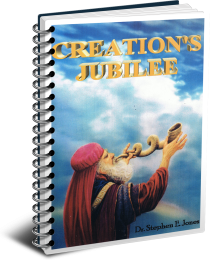
The third squadron will have to wait until the Creation Jubilee after the age of judgment, when at last all creation is set free into the glorious freedom of the children of God (Rom. 8:19-21).
Those who understand the word of God and who have New Covenant faith in the promises of God (Rom. 4:21, 22) are those whom God will use as His priests. They will minister to God in their linens and to men in their woolens in the ages to come. Their ministry will be most effective, because they will have their full inheritance and will minister to others according to the full authority of the sons of God.
The King is Jesus, under whose feet all creation must be subject (1 Cor. 15:27, 28). The citizens are those who follow the King. The laws of the Kingdom prophesy the incorruptible and sinless nature of Christ and reveal the character of those in whose hearts the law is written.
The law also reveals which believers are obedient and which ones remain “lawless” (anomia), as Jesus explained in Matt. 7:21, 22, 23. Also important is the distinction between Old Covenant believers and New Covenant believers. Those who have faith in their own vows to God, thinking that they are saved by their own will, are Old Covenant believers.
Those who have faith that God is able to fulfill His promises are New Covenant believers to whom righteousness is imputed (Rom. 4:21, 22). Likewise, John 1:13 affirms that the sons of God are begotten by God, “not of blood (i.e., bloodline), nor of the will of the flesh, nor of the will of man, but of God.”
At the second coming of Christ, the regular citizens of the Kingdom will receive a land inheritance, much like the Israelites were given estates in Canaan. Yet this inheritance will be limited to the earthly realm, because such people remain dressed in woolens.
On the other hand, the overcomers will be given access to linen (spiritual) garments and will have access to heaven as well. These will be able to go to heaven or come to earth at will, for their inheritance is in both heaven and earth.
At the end of time, the Creation Jubilee, all of creation will be set free by the law of Jubilee, which is the law of grace. The Jubilee cancels all debt, and we know that all sin is reckoned as a debt. After an age of judgment, the sin-debts of all men will be cancelled, so that the law might be fulfilled in Lev. 25:10, 13,
10 You shall thus consecrate the fiftieth year and proclaim a release through the land to all its inhabitants. It shall be a jubilee for you, and each of you shall return to his own property and each of you shall return to his family… 13 On this year of jubilee, each of you shall return to his own property.
The law, which expresses the mind and nature of God, does not permit everlasting punishment. No sin in a finite world can merit infinite punishment, because the judgment always fits the crime (Exodus 21:24, 25). The Hebrew word often translated “everlasting” or “eternal” in the Old Testament is olam, which is from the root word alam, “to hide.” Olam means “hidden, unknown, indefinite.” It does not mean “infinite.”
In the New Testament, the Greek equivalent to olam is aionian, “pertaining to an age.” An age is an indefinite period of time and matches the Hebrew concept of olam perfectly. While these words in some contexts may mean a never-ending time period, most of the time the words are used to convey an indefinite period of time that comes to an end.
So the animal sacrifices were to be given to the priests “forever” (olam, Lev. 7:36, 37) but ended when Jesus was presented as the true Sacrifice. Phinehas and his descendants were given the high priesthood as “a covenant of a perpetual [olam] priesthood” (Num. 25:13), which lasted only until the time of Zadok. Jonah was in the belly of the whale “forever” (olam, Jonah 2:6), which was only three days and three nights.
The fact that olam does not mean “forever” or “everlasting” means that the law of Jubilee can do its work of setting all sinners free from the slavery imposed upon them on account of sin. The Jubilee cancels all remaining debt after a man has labored as a slave to sin in the preceding years. There is no debt so great that a slave cannot be released in the year of Jubilee.
For this reason, we can say with confidence that God’s judgments will come to an end. For the overcomers, the Jubilee will apply at the second coming of Christ. For the citizens of the Kingdom, the Jubilee will apply at the great White Throne judgment when all the dead are raised, for then, Jesus said, the believers will be given immortal “life” (John 5:28, 29).
Referring to the (former) unbelievers at the great White Throne, the word says that “every knee will bow, every tongue will swear allegiance” to Christ (Isaiah 45:23). Paul says in Phil. 2:10, 11,
10 so that at the name of Jesus every knee will bow, of those who are in heaven and on earth and under the earth, 11 and that every tongue will confess [exomologeo, “profess”] that Jesus Christ is Lord, to the glory of God the Father.
Paul says in 1 Cor. 12:3 that “no one can say ‘Jesus is Lord,’ except by the Holy Spirit.” Hence, if at the great White Throne judgment every knee bows and every tongue confesses or professes that Jesus Christ is Lord, it means that they have finally come to the truth and have become Spirit-filled believers.
They will still have to grow to maturity in the metaphorical “lake of fire,” which is the discipline of God’s “fiery law” (Deut. 33:2, KJV); but this is the great baptism of fire that we all undergo even today as Spirit-filled believers.
The new believers (at the great White Throne) will still have to grow to spiritual maturity, following the prescribed path of Passover, Pentecost, and Tabernacles before they can receive their inheritance as sons of God. But the Jubilee trumpet will be blown at the end of time, and all of creation will ultimately receive its hope of redemption.
Only then will the Kingdom of God be fully established on earth as it is in heaven.
We are only able to do what we do because of your support. If you feel led to support this ministry, we deeply appreciate it