Latest Posts
View the latest posts in an easy-to-read list format, with filtering options.
View the latest posts in an easy-to-read list format, with filtering options.
Multi-part posts on a particular topic, grouped together in "series" pages.
Look through our blog archive by year / month, or in a massive title list.
10/22/2026 - When a watchman gives warning, he/she should keep in mind the principle in Ephesians 4:15, 15 But... Read More

10/21/2026 - I received this email from our ministry representative in Nepal today. Dear Respected Sir and pray... Read More
10/21/2026 - Ezekiel’s call as a watchman is described beginning in Ezekiel 3:18, 19, 18 When I say to th... Read More
Read over 100 books written by Dr. Jones, available to read for free online. Several of the books have also been translated into different languages, and are also available to read for free. The only time you pay is when you purchase a physical version of a book.
View Full Book List
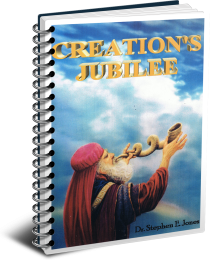

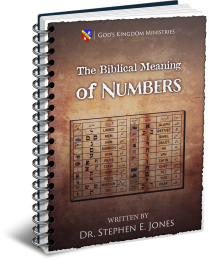

Read a variety of tracts that condense a topic into a short, single page format. These tracts can be read for free online, or physical copies can be purchased in bundles. If you are subscribed to the FFI Newsletter, you will receive new tracts when they are released.
View Full Tract ListAmerica arose in the latter part of the (prophetic) reign of King Saul—that is, the Pentecostal Age from 33 A.D. to 1993. Just as Saul reigned 40 years, so also did Pentecost rule for 40 Jubilee cycles (40 x 49 years). Pentecost was a leavened feast (Leviticus 23:17), good only insofar as its offering was baked with the baptism of fire. Apart from holy fire, the church found it impossible to fulfill its divine calling. Instead, it sowed the seeds of its own destruction.
This was true of the “the church in the wilderness” (Acts 7:38) under Moses, and it was equally true of the second church that was established at Pentecost in Acts 2. The church under Moses rejected the word of the Lord at Mount Sinai (Exodus 20:19), and this day was thereafter celebrated as the Feast of Weeks—later called by the Greek name, Pentecost.
In Acts 2 the actual fulfillment of Pentecost occurred with a tiny group of 120 disciples in the upper room, but succeeding generations could not maintain this holy fire. They replaced it with “strange fire” (Leviticus 10:1), just as the Israelites had done under Moses. So after Imperial Rome fell in 476, Religious Rome consolidated power in the time of Justinian (534). He established canon law, based on an imperfect understanding of God’s law. It established the Feudal System, which essentially enslaved the majority of the populations of Christian nations.
By the time Columbus rediscovered America in 1492, slavery was fully entrenched in the church throughout Europe. The church had lost the sword of the Spirit many centuries earlier, and they had taken up the physical sword as a substitute, converting others by force of arms and attempting to take the Kingdom by force, as Jesus said in Matthew 11:12,
12 From the days of John the Baptist until now the kingdom of heaven suffers violence, and violent men take it by force.
When the Spirit of God moves, it is a force of its own and does not need physical force to change the hearts of men. Jesus showed this to us by personal example. But when men lose the spiritual sword, they gravitate toward the physical sword, just as they turn to “strange fire” when the fire from God is allowed to die out.
This is how the little horn in Daniel’s prophecy came into power in 534 A.D.
After the so-called Dark Ages in Europe, one of the major turning points in history was the year 1492, when Columbus crossed the ocean for the first time since the Vikings had come. The year 1492 was significant in Bible prophecy. The roots of this date go back to Noah's curse upon Canaan in the year 1660 (years from Adam). This put Canaan on Cursed Time, as I explained in my book, Secrets of Time (chapter 4). Cursed Time is a period of 414 years (or a multiple of it).
In this case, Canaan’s judgment came due in the year 2488 (from Adam), which was 2 x 414 years after Noah’s curse (Genesis 9:25). This is the year that Joshua entered Canaan and brought judgment upon those people. Another 7 x 414 years brings us to the year 1492 A.D. That is the connecting link that ties Joshua’s conquest of Canaan to the European conquest of the American hemisphere.
The war against the Canaanites, though commanded by God, was not really the ultimate solution to the problem. If the Israelites had been able to receive the word of God from the fire on the Mount, God would have equipped them with spiritual swords (the word of God, Ephesians 6:17) by which to conquer Canaan. The Canaanites would have been converted in a New Covenant manner, dying to the flesh through faith in hearing the word and by baptism. But having rejected the spiritual sword, they were left only with physical swords.
The same problem emerged in 1492 and beyond. The Europeans conquered people by the sword and converted the survivors, teaching them to worship God with “strange fire.” The tragedy is that the Church had rejected the baptism of the Holy Spirit, following the pattern of ancient Israel. For this reason, they felt it necessary to conquer the New World by force and bloodshed.
Religions with a sword can force people to join their church organization, but they cannot force them to join the true Church, whose names are written in the Lamb’s book of Life. They can force men to have a relationship with the Church, but they cannot force men to have a personal relationship with Jesus Christ. The problem comes, however, when Christians assume that the religious organization is the Church and that one must become members of the organization to have a relationship with Jesus Christ.
Thus, while the year 1492 had the potential to begin a new era of bringing the Gospel of Peace to the rest of the world, man had largely lost the ability to do that work properly. Years later, when the United States became a nation, they improved somewhat on the Jesuit method of conversion, particularly among the Puritans, Quakers, and Mennonites, who were peace-loving people. Unfortunately, the United States government was not as Christian and broke countless treaties with the Indian population. Its generals were usually more skilled with physical swords than with spiritual swords, and blood flowed freely.
God had given America a Great Awakening through George Whitefield’s ministry from 1738 to his death in 1770. His message of personal freedom and equality through Christ sparked broader ideas about national freedom and fueled the American Revolution. Yet when the Constitution was written in 1788, Whitefield’s “fire” was not sufficient to overcome the major obstacles of slavery and inequality among men. Slavery was institutionalized, and the principle that “all men are created equal” applied only to the Europeans.
A century later, America had another Great Awakening, led largely by Charles Finney, whose “fire” was preached from 1835-1875.
“His religious views led him, together with several other evangelical leaders, to promote social reforms, such as abolitionism and equal education for women and African Americans. From 1835 he taught at Oberlin College of Ohio, which accepted students without regard to race or sex. He served as its second president from 1851 to 1865, and its faculty and students were activists for abolitionism, the Underground Railroad, and universal education.”
https://en.wikipedia.org/wiki/Charles_Grandison_Finney
These teachings contributed to the outbreak of the war between the southern “slave states” and the northern “free states” from 1861-1865. While there were many economic causes of this war, the main emotional and spiritual motive in the public mind (in the north) was to end slavery. From the southern perspective, the issue was the right of each state to choose or reject slavery, as set forth in the final version of the Constitution itself.
The right to hold slaves had never been fully accepted by the northern states, and the issue festered until the war broke out. Yet the second Great Awakening was not extensive enough to bring a national repentance for refusing to love one’s neighbor or to treat people equally. The law says in Numbers 15:15, 16,
15 As for the assembly, there shall be one statute for you and for the alien [gar, “foreigner”] who sojourns with you, a perpetual statute throughout your generations; as you are, so shall the alien [gar] be before the Lord. 16 There is to be one law and one ordinance for you and for the alien who sojourns with you.
This is repeated in Leviticus 24:22,
22 There shall be one standard for you; it shall be for the stranger [gar] as well as the native, for I am the Lord your God.
Again, we read in Exodus 23:9,
9 You shall not oppress a stranger [gar], since you yourselves know the feelings of a stranger, for you also were strangers [gar] in the land of Egypt.
The Israelites had remained in bondage in Egypt for centuries. God reminds them here that they should know better than to oppress strangers (foreigners, aliens). By the simple Golden Rule, they ought to treat others as they themselves would want to be treated. In fact, it could be said that God put the Israelites into bondage in Egypt to show them what it is like to be oppressed as foreigners. That way, they would know not to treat foreigners in the same way.
This lesson applied to the Israelites in the land of Canaan and to the Europeans in the Americas. It also applies to the Zionists in Palestine today.
There are some who attempt to undermine this law by claiming that gar refers to Israelites who were coming back from foreign lands. Hence, they say, it does not apply to non-Israelites. That, however, is refuted by the text itself, which shows that the Israelites were gar in the land of Egypt. The Israelites were not Egyptians returning from afar. They were ethnically different.
Finally, when a man asked Jesus, “Who is my neighbor?” (Luke 10:29) in response to the second great commandment, Jesus gave him a parable about the Good Samaritan. The good neighbor was not the priest or the Levite; he was a Samaritan. This was one of the big issues in Jesus’ day, because the Jews hated the Samaritans and certainly did not consider them to be Israelites. Jesus’ answer was in accordance with the law of God.
Today, we face the same issue with other ethnicities. In early America the issue manifested itself primarily in the question of slavery and in the treatment of the Caribbean and Native American populations of North and South America. Will we truly love our neighbor as ourself (Leviticus 19:18), or will we remain lawless and liable for divine judgment?

Dr. Stephen Jones has been writing blog posts since 2005 on a variety of topics from Bible Studies to World News, and he has been writing books since 1992. Dr. Jones' most important writings came after God brought him back into the full-time ministry in 1991. It is here that all his earlier years of searching the Scriptures began to come into clear focus. He combines a knowledge of the Old and New Testaments with a personal revelation of God that began and developed during the "wilderness" period of his life, which he often refers to as God's True Bible College... Read More
We are only able to do what we do because of your support. If you feel led to support this ministry, we deeply appreciate it