Latest Posts
View the latest posts in an easy-to-read list format, with filtering options.
View the latest posts in an easy-to-read list format, with filtering options.
Multi-part posts on a particular topic, grouped together in "series" pages.
Look through our blog archive by year / month, or in a massive title list.
10/13/2026 - The beryl-like appearance of the wheels in Ezekiel 1:16 portrays the preciousness and radiant glor... Read More
10/12/2026 - Ezekiel 1:13–21 presents God’s throne as living, active, and perfectly governed by His... Read More
10/09/2026 - Israel encampment in the wilderness mirrored Ezekiel’s vision of the four living creatures.... Read More
Read over 100 books written by Dr. Jones, available to read for free online. Several of the books have also been translated into different languages, and are also available to read for free. The only time you pay is when you purchase a physical version of a book.
View Full Book List
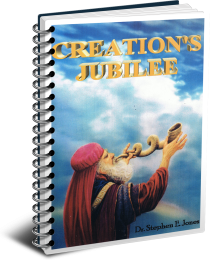

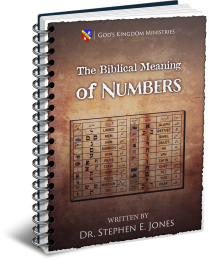
Read a variety of tracts that condense a topic into a short, single page format. These tracts can be read for free online, or physical copies can be purchased in bundles. If you are subscribed to the FFI Newsletter, you will receive new tracts when they are released.
View Full Tract ListGenesis 27:1 says,
1 Now it came about, when Isaac was old and his eyes were too dim to see, that he called his older son Esau and said to him, “My son.” And he said to him, “Here I am.”
In his later years, Isaac was blind. In fact, Isaac thought he would soon die, so he decided to pass the blessing (birthright) to Esau. But first, he instructed Esau to hunt venison for a celebratory meal. His mother, Rebekah, overheard this conversation, and she immediately instructed Esau’s twin brother, Jacob, to pretend to be Esau, thereby tricking Isaac into giving Jacob the blessing.
This was a classic case of stolen identity, made possible by Isaac’s blindness. The plan worked, although Isaac was suspicious. Yet he could not believe that Jacob would lie to him in such an important matter. So he blessed Jacob, thinking he was blessing Esau (Genesis 27:27-29).
Then Esau arrived with his venison and discovered that he had been preempted by his younger brother. He appealed to his father on account of the fraud, but Isaac could only give him a subordinate blessing (Genesis 27:39, 40). At that point, Isaac probably remembered the prophecy given to Rebekah during her pregnancy. Genesis 25:23 says,
23 The Lord said to her, “Two nations are in your womb; and two peoples will be separated from your body; and one people shall be stronger than the other; and the older shall serve the younger.”
In other words, Jacob was the one that God had chosen to receive the birthright. Even so, Jacob’s deception violated the rights of the firstborn, which could not be set aside without a lawful cause. Esau had not yet had time to prove himself to be unworthy, and, as Moses later pointed out, the firstborn son could not be disinherited unless he proved to be a stubborn or rebellious son.
Deuteronomy 21:15-17 says,
15 If a man has two wives, the one loved and the other unloved [or “hated” KJV], and both the loved and the unloved have borne him sons, if the firstborn son belongs to the unloved… 17 he shall acknowledge the firstborn, the son of the unloved, by giving him a double portion of all that he has, for he is the beginning of his strength; to him belongs the right of the firstborn.
This law is immediately followed by the law regarding “a stubborn and rebellious son” (Deuteronoomy 21:18). These two laws are linked purposely. It reminds us of the manner in which Reuben, the firstborn of Jacob, was disqualified (1 Chronicles 5:1, 2).
In Malachi 1:2, 3 we see how God viewed Jacob and Esau:
2 “I have loved you,” says the Lord. But you say, “How have You loved us?” Was not Esau Jacob’s brother?” declares the Lord, “yet I have loved Jacob; 3 but I have hated Esau…”
This does not justify Jacob’s lie to his blind father. In fact, by the law of the hated son, it provides Esau with legal protection of his rights. Isaac, in his blindness, passed on the birthright too soon; Jacob lied to get it; and Esau’s rights were violated. Isaac appears to have realized this when he blessed Esau, telling him in Genesis 27:40 KJV,
40 … when thou shalt have the dominion, that thou shalt break his yoke from off thy neck.
The dominion mandate was the authority over the estate (ultimately, God’s Kingdom), which was to be used to bring forth fruit—the sons of God. It is clear that Isaac knew that Jacob would have to give “the dominion” back to Esau for a season in order to allow Esau to prove himself unworthy.
Jacob eventually gave the dominion (“scepter”) to his fourth son, Judah (Genesis 49:10). But Judah was disqualified for ten generations because his sons were born illegitimately (Genesis 38 with Deuteronomy 23:2). David was the tenth generation, and his descendants ruled Jerusalem until the Babylonian captivity. When Judah returned, they often had trouble with Esau’s descendants (Edom, or Idumea).
Finally, however, Judah conquered Idumea and forced them to become Jews (Josephus, Antiquities of the Jews, XIII, ix, 1). At this point, Jacob’s descendants through Judah seemed to thwart Isaac’s promise to Esau. But God does not forget, and Esau certainly had a valid legal case against his brother.
This means that God would have to re-shape Jacob’s character in order to prepare him to receive the promised birthright in a lawful manner. It took many years just to shape the character of Jacob himself, but it literally took thousands of years to prepare the greater body of Israelites. This project was intricately intertwined with the two comings of Christ Himself, because His work was designed to prepare an entire body of overcomers to rule the earth under Him.
Hence, this legal case in the divine court began to reach its climax with the rise of the Zionist movement in the late 1800’s.
The spirit of Edom arose in the late 1800’s in the Zionist movement, and in 1948 “Jacob” gave the birthright back to Esau. Once again, this occurred through stolen identity. Just as Jacob had pretended to be Esau to steal the birthright, so also did Esau pretend to be Jacob in order to steal it back. All of this followed the principle of divine justice in Exodus 21:24, “eye for eye,” which means that the judgment must fit the crime.
Isaiah speaks of this most clearly, referring to Jacob-Israel as the blind servant. Isaiah 42:1 says,
1 “Behold, My Servant, whom I uphold; My chosen one in whom My soul delights. I have put My Spirit upon Him; He will bring forth justice to the nations.”
As we see so often, God speaks on two levels. It is a messianic reference, but it also refers to Isaac. So later we read in Isaiah 42:18, 19,
18 Hear, you deaf! And look, you blind, that you may see. 19 Who is blind but My servant, or so deaf as My messenger whom I send? Who is so blind as he that is at peace with Me, or so blind as the servant of the Lord?
We could hardly attribute this blindness to the Messiah. It is, in fact, referring to the people of Israel—the descendants of Isaac. So we read in Isaiah 41:8,
8 But you, Israel, My servant, Jacob whom I have chosen, descendant of Abraham, My friend.
Just as God Himself had blinded the eyes of Isaac, so also does God take credit for blinding the eyes of His children in the latter days. We read this in Isaiah 6:9, 10,
9 He said, “Go, and tell this people: ‘Keep on listening, but do not perceive; keep on looking, but do not understand.’ 10 Render the hearts of this people insensitive, their ears dull, and their eyes dim, otherwise they might see with their eyes, hear with their ears, understand with their hearts, and return and be healed.”
Isaac’s blindness thus set a prophetic pattern for the condition of his descendants. Although to see clearly was the will of God, blindness was part of the divine plan. This blindness was retained in the New Testament. Jesus cited Isaiah 6 when His disciples asked Him why He spoke in parables (Matthew 13:10-15). The truth had to be hidden from the majority and revealed only to a few in order to accomplish the divine plan (Matthew 13:16).
The final prophetic purpose of such blindness became clear in 1948, when the blind church—heirs of the promise—was deceived by the heirs of the spirit of Edom. The Zionist Edomites then deceived “Isaac” by pretending to be Jacob-Israel in order to take back the birthright that had been taken from them unlawfully in Genesis 27. God allowed this because it constituted His judgment in favor of Esau-Edom. Call it reparation for Jacob’s deception.
In 1948, it was the blindness of the church that caused Christians to support Esau’s claim in the divine court. The church thought that the Zionist Jews were the biblical Israelites, not knowing the Scriptures nor even plain history. The prophecies of the restored house of Israel were directed toward the northern ten tribes who had been cast out and exiled to Assyria. Men attempted to explain the lost birthright by transferring it to Judah—as if the exile of Israel marked a permanent condition that could not be rectified.
The tribe of Judah had been forbidden in the law to return to the old land while yet in a state of hostility toward Jesus Christ (Leviticus 26:40-42). Hence, the Jews got around this prohibition by returning under the banner of Esau-Edom, to whom Isaac had promised “the dominion” (temporarily).
The name Israel had been given to Jacob by the angel, and Jacob passed this name down to Joseph’s sons (Genesis 48:16). Israel is the name given to the birthright holders. Hence, the Zionist Edomites took the name Israel. This was the judgment of God upon Jacob for his sin of deception.
It is noteworthy that this legal ruling in favor of Esau had to occur prior to the return of Christ, because in His second coming, Christ comes as Joseph to claim His birthright. For this reason, Revelation 19:13 says that He will come “clothed with a robe dipped in blood.” Joseph is the only man in Scripture whose robe was dipped in blood (Genesis 37:31).
The purpose of Christ’s first coming was to claim the scepter that was given to Judah in Genesis 48:10. The purpose of His second coming is to claim the birthright, the right to bring forth the sons of God in the fruitfulness mandate. For this reason, the birthright controversy had to be resolved prior to His second coming.
We now know from actual recent events that Esau was given 76 years in which to prove himself to be unworthy of the birthright. The United Nations passed Resolution 181 on November 29, 1947, establishing an Israeli state alongside a Palestinian state. The Zionists insisted upon their right to form a state, but they refused to recognize the right of Palestinians to have a state of their own. Instead, they oppressed the Palestinians, stole as much land as they could, and refused to fulfill the Abrahamic covenant to be a blessing to all families of the earth (Genesis 12:3).
Finally, we see that nearly 76 years later, on October 7, 2023, the Palestinians in Gaza, who had been living in an open-air prison since 1948, fought back. This triggered the final conflict, which, having drawn in the Iranians, will end with the final destruction of Jerusalem. The Zionist Edomites seem unaware that their time has expired to prove themselves worthy or unworthy. The bloodthirsty spirit of Edom dominates their thinking, and they assume that they will remain under divine protection forever.
But this is an illusion, based on many misunderstandings of prophecy. In 2023 their probation ended, and God ruled against them. This is called “the controversy of Zion” (Isaiah 34:8 KJV), which, by context, is God’s legal case against Edom (Isaiah 34:5). This appears to be the final legal decision in the divine court which had to be resolved before the return of Christ.
At some point, the blind church will be healed and will then see its error in supporting Christian Zionism. However, this healing is unlikely prior to the destruction of modern Edom—the Zionist state and its capital, Jerusalem. That prophecy is found most clearly in Jeremiah 19:10, 11 and in the casting away of Hagar-Jerusalem (Galatians 4:25, 30).
When the dust settles, Christ will rule from the heavenly Jerusalem with His overcomer saints (Revelation 20:6).

Dr. Stephen Jones has been writing blog posts since 2005 on a variety of topics from Bible Studies to World News, and he has been writing books since 1992. Dr. Jones' most important writings came after God brought him back into the full-time ministry in 1991. It is here that all his earlier years of searching the Scriptures began to come into clear focus. He combines a knowledge of the Old and New Testaments with a personal revelation of God that began and developed during the "wilderness" period of his life, which he often refers to as God's True Bible College... Read More
We are only able to do what we do because of your support. If you feel led to support this ministry, we deeply appreciate it